

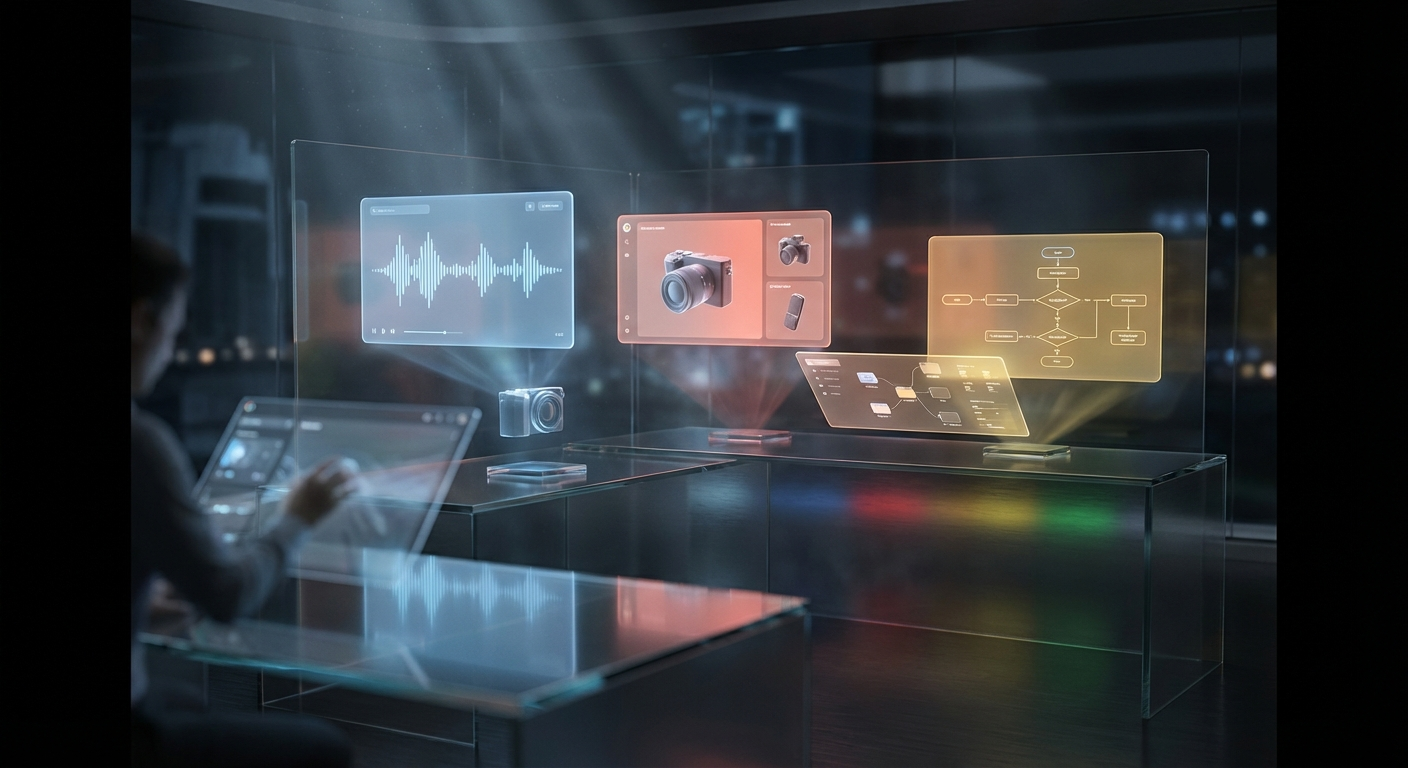
Google Labs just dropped three significant updates that push their experimental AI offerings further into creative and business workflows. Opal gets agentic intelligence, ProducerAI joins the Google Labs family bringing professional music creation, and Pomelli adds studio-quality product photography. Each addresses a different creative use case, but together they signal Google’s commitment to building practical AI tools for creators and small businesses.
Let’s break down what’s new and what it means for anyone building with or evaluating Google’s AI ecosystem.
Opal: From Static Workflows to Agentic Intelligence
Opal has been Google Labs’ no-code platform for building AI-powered workflows—chain together models, inputs, and outputs without writing code. The platform just got significantly smarter.
The new agent step transforms what were previously static, predetermined workflows into dynamic systems that figure out their own execution path. Instead of you specifying exactly which model to call and when, the agent analyzes your goal and determines the optimal approach, triggering the right tools (Web Search, Veo for video, etc.) as needed.
Google illustrates this with an interior design example. The old way: upload a photo, pick a style, get a redesigned image. One-way, predictable. The new way: the agent becomes a collaborator. Upload your living room, describe “mid-century modern,” and the agent generates an initial concept. Not right? Give feedback. The agent refines its understanding, researches niche design sub-styles, and iterates until the output feels uniquely yours rather than a generic template.
New Agentic Capabilities
Three features make this practical:
Memory — Opals can now remember information across sessions. User preferences, brand identity, running lists—whatever context makes your workflow smarter over time. Google’s Video Hooks Brainstormer example stores brand identity so you can generate tailored video ideas without repeating yourself.
Dynamic Routing — Define multiple paths with custom logic. Describe your criteria, and the agent transitions to the correct step when conditions are met. Their Executive Briefing Opal tailors output based on whether you’re meeting an existing or new client—searching the web for backgrounds or pulling internal notes accordingly.
Interactive Chat — Agents can now ask follow-up questions. If initial input is insufficient, the Opal keeps asking or showing examples rather than producing garbage output. This shifts the paradigm from “prompt engineering” to actual conversation.
The philosophy here is notable: Google wants to give you both the power of autonomous agents pursuing your goal and the control of step-by-step workflows you can customize. Power users can still use fixed steps for high-precision work. Casual users get intelligent defaults that self-correct.
ProducerAI: Professional Music Creation Joins Google Labs
ProducerAI isn’t new—it’s been operating independently as an AI music creation platform. What’s new is that Google acquired the team and integrated their work into Google Labs, giving them access to the latest models from Google DeepMind.
The platform uses:
- Gemini for understanding and orchestration
- Lyria 3 (preview) for high-fidelity music generation
- Veo for music video creation
- Nano Banana for image generation
- SynthID watermarking on all outputs
The practical pitch: start with “make a lofi beat” and progressively refine—add reverb, punch up the low end, blend genres. ProducerAI treats creation as iterative and collaborative rather than a one-shot generation.
Lyria 3 and Creative Control
ProducerAI uses a preview version of Lyria 3, Google DeepMind’s newest music model. The key advancement is understanding musicality—rhythm, arrangement, structure—with granular controls over tempo and time-aligned lyrics.
The Spaces feature stands out for creative control. Using natural language, you can create entirely new instruments, effects, and audio environments. Google links to examples ranging from a simple keyboard to a node-based modular audio patching environment. These mini-apps are shareable and remixable across users.
The pedigree matters here. The founder previously built AmieStreet.com (MP3 store for independent artists) and Songza (music curation by mood/activity, acquired by Google in 2014). This isn’t Google’s first attempt at music; it’s integrating people who’ve been building music technology for decades.
Artist partnerships have shaped development. Grammy-winning artists including Lecrae, The Chainsmokers, and Wyclef Jean have collaborated on the platform. Wyclef used Lyria during development of his song “Back From Abu Dhabi.”
ProducerAI is available globally at producer.ai with free and paid tiers.
Pomelli Photoshoot: Studio-Quality Product Images for SMBs
Pomelli has been Google Labs’ tool for small-to-medium businesses to create marketing materials. The new Photoshoot feature addresses a specific pain point: getting professional product photos without a professional studio.
The workflow is straightforward:
- Pick a product — Start with any picture, rough quality acceptable
- Choose a template — Studio, lifestyle, or let Pomelli suggest based on your product
- Generate — The system applies your business aesthetics (stored as “Business DNA”) to create on-brand images
- Refine — Edit with finishing touches
This uses Nano Banana image generation, the same model powering image creation in Gemini.
Additional Updates
Beyond Photoshoot, Pomelli got several improvements:
Better image generation:
- More accurate prompt following
- In-line editing (“change my background to a forest”)
- Style reference images for consistent aesthetics
More targeted campaigns:
- Upload images to ground your creative output
- Add product URLs to pull images, titles, and descriptions from your site
The target user is clear: a small business owner selling handmade jewelry or artisanal coffee who needs professional visuals for their website and social media but doesn’t have the time or budget for actual product photography.
What This Means for Google’s AI Strategy
A few patterns emerge from these releases:
Agentic is the direction. The Opal update is the clearest signal. Google isn’t just building better models—they’re building systems that can reason about goals and orchestrate multiple tools autonomously. This aligns with the broader industry movement toward AI agents rather than chat interfaces.
Creative tools are a priority. Music, images, video, workflows—Google Labs is covering the creative spectrum. Unlike enterprise-focused plays, these tools are accessible to individuals and small businesses, building a broad user base for experimental features.
Model integration is the moat. ProducerAI gets access to Gemini, Lyria 3, Veo, and Nano Banana in a single platform. Pomelli uses Nano Banana. Opal can trigger Veo for video. The value isn’t any single model—it’s orchestrating multiple specialized models into coherent workflows.
SMB focus for Pomelli. While Opal and ProducerAI could appeal to professionals and hobbyists alike, Pomelli is explicitly targeting small-to-medium businesses who need marketing help but lack resources. This is a different user than enterprise AI tools typically target.
Try Them Out
All three tools are available now:
- Opal — opal.google — Build agentic workflows, no code required
- ProducerAI — producer.ai — Music creation with free and paid plans
- Pomelli — labs.google.com/pomelli — Product photography and marketing for small businesses
These are Google Labs experiments, which means they’re early, may change significantly, and aren’t guaranteed to become permanent products. But they’re functional enough to build with today, and they offer a window into where Google’s applied AI research is heading.
For organizations evaluating AI tools: these represent Google’s answer to the question of what comes after chat. Agentic workflows, creative production, and business-focused automation—built on a foundation of specialized models working together. Worth experimenting with, especially if your use case aligns with the creative and small business focus.