
“Images are a language, not decoration. A good image does what a good sentence does—it selects, arranges, and reveals.”
That’s how OpenAI opens their announcement of ChatGPT Images 2.0, and it signals exactly what makes this release different from everything that came before. This isn’t about generating prettier pictures. It’s about generating images that actually work—images you can explain a mechanism with, stage a mood with, test an idea with, or make an argument with.
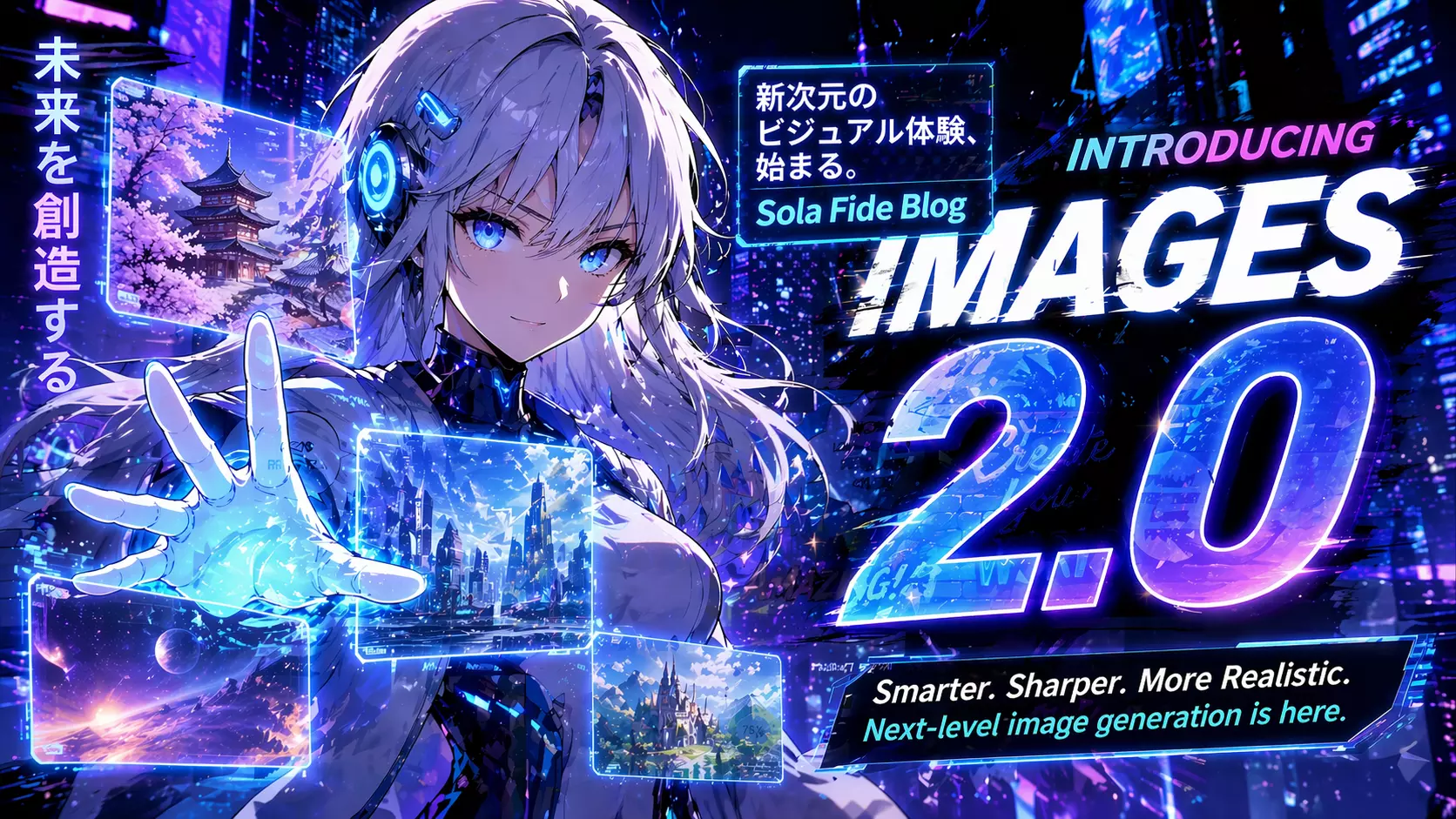
Available now to all ChatGPT, Codex, and API users, Images 2.0 represents what OpenAI calls “a step change” in AI image generation. Let’s break down what’s actually new and why it matters.
Precision That’s Actually Usable
The core promise of Images 2.0 is simple: instead of getting something vaguely in the neighborhood of what you meant, you get something you can actually use.
OpenAI describes the model as bringing “an unprecedented level of specificity and fidelity to image creation.” It can follow instructions, preserve requested details, and render the fine-grained elements that have historically broken AI image models:
- Small text
- Iconography
- UI elements
- Dense compositions
- Subtle stylistic constraints
All of this at up to 2K resolution in the API. The model’s sense of composition and visual taste means results feel less “AI-generated” and more intentionally designed. It uses expanded visual and world knowledge to fill in gaps, so you get smarter images with less prompting.
The Text Rendering Problem Is Solved
To date, AI image models have been more consistent in English and other Latin-script languages, but far less precise beyond that—especially when text was complex or dense. We’ve all seen the memes of AI-generated restaurant menus with hilariously misspelled food items.
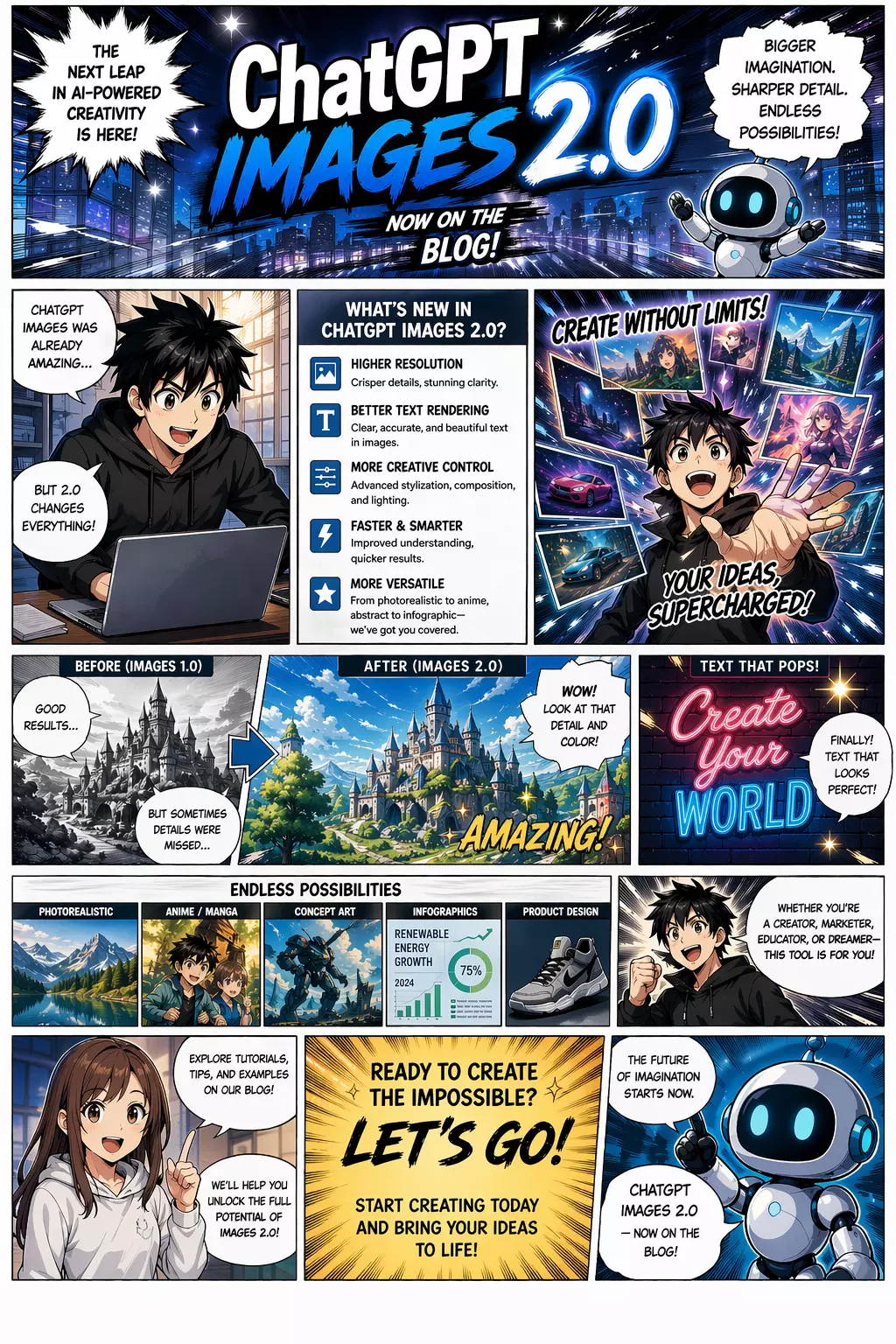
Images 2.0 moves beyond that barrier with stronger multilingual understanding and significant gains in non-Latin text rendering, particularly in Japanese, Korean, Chinese, Hindi, and Bengali. The model can produce images with non-English text that’s not only rendered correctly but with language that flows coherently.
This isn’t just translating a label or two. It’s generating visually coherent outputs where language is part of the design itself—posters, explainers, diagrams, comics, and more. This makes the model genuinely useful for people creating visuals in the languages they actually use.
Thinking Capabilities: A First for Image Generation
Here’s where it gets interesting. Images 2.0 is OpenAI’s first image model with thinking capabilities.
When a thinking or pro model is selected in ChatGPT, the model takes more time and works more agentically behind the scenes to thoroughly understand and execute tasks. It can:
- Search the web for real-time information
- Transform uploaded materials into clear visual explainers
- Reason through the structure of an image before generating
- Create multiple distinct images from one prompt
- Double-check its own outputs
In this mode, Images 2.0 acts more like a visual thought partner, helping carry a project from rough concept to finished asset with significantly less work on your part. This is especially valuable when accuracy, up-to-date information, consistency, and visual cohesion matter most.
The knowledge cutoff has been pushed to December 2025, making outputs more relevant and contextually accurate—particularly important for explainers, educational graphics, and visual summaries where correctness matters as much as aesthetics.
Multi-Image Generation with Continuity
With thinking enabled, Images 2.0 can produce multiple distinct images at once—a first for image generation in ChatGPT. This opens up workflows that were previously cumbersome:
- A sequence of manga pages
- A set of redesign directions for every room in a house
- A family of poster concepts
- A collection of social graphics in different aspect ratios and languages
Instead of prompting one image at a time and stitching the project together yourself, you can ask for a coherent set of up to eight outputs in one go—with character and object continuity that sequentially builds on one another.
Stylistic Range and Realism
Images 2.0 shows significantly improved fidelity across a wide range of visual styles. It’s better able to capture the defining characteristics of photos—including the tiny flaws that add realism—as well as cinematic stills, pixel art, manga, and other distinctive visual languages.
The model delivers greater consistency in texture, lighting, composition, and fine detail. Outputs more faithfully reflect the style requested rather than approximating it. OpenAI specifically calls out use cases like game prototyping, storyboarding, marketing creative, and creating assets in a particular medium or genre.
Flexible Aspect Ratios
The new model supports aspect ratios as wide as 3:1 and as tall as 1:3. This means outputs are ready to fit the formats you actually need:
- Wide banners and presentation slides
- Posters and mobile screens
- Bookmarks and social graphics
- Instagram stories, LinkedIn posts, Twitter cards
You can ask for the aspect ratio you want in the prompt, or select from preset options to regenerate any image in new dimensions.
Real Business Applications
Developers and businesses can access these capabilities through gpt-image-2 in the API, building high-quality image generation and editing into the products they’re already developing.
OpenAI highlights real business use cases: localized advertising, infographics, explainers, educational content, design tools, creative platforms, and web creation products. They’re already getting production feedback from partners like Canva, Figma, Adobe, and OpenArt.
As Canva’s Creative Strategist Dwayne Koh put it:
“What surprised us most was the detail GPT Image 2 added. It introduced elements we hadn’t considered, like a ‘viral on TikTok’ sticker—a smart creative choice designed to build hype. The model wasn’t just rendering images. It was interpreting briefs, understanding audiences, and making creative decisions behind the scenes. We’ve been measuring AI on technical outputs. The real shift is creative reasoning and design taste—and that shift just happened.”
Honest About Limitations
OpenAI is refreshingly direct about what still doesn’t work. Images 2.0 can still struggle with:
- Tasks requiring a complete physical world model
- Origami guides and puzzles like Rubik’s Cubes
- Details on hidden, angled, or reversed surfaces
- Very dense or repetitive visual details (like fine grains of sand)
- Labels and diagrams with precise arrows or part labels
In the API, outputs over 2K resolution are currently in beta and may produce inconsistent results. OpenAI calls these “important frontiers for future work.”
Availability and Pricing
ChatGPT Images 2.0 is available now to all ChatGPT and Codex users. Advanced outputs with thinking are available to ChatGPT Plus, Pro, and Business users.
The gpt-image-2 model is available in the API with token-based pricing (per 1M tokens):
| Modality | Input | Cached Input | Output |
|---|---|---|---|
| Image | $8.00 | $2.00 | $30.00 |
| Text | $5.00 | $1.25 | $10.00 |
For comparison, gpt-image-1.5 runs $8.00/$2.00/$32.00 for images—so you’re getting a $2 reduction on output costs with the new model.
The Bottom Line
OpenAI frames this release as a shift “from rendering to strategic design, from a tool to a visual system.” That’s marketing language, but the capabilities back it up. Images 2.0 isn’t just about making prettier pictures—it’s about generating images that can explain, teach, argue, and sell.
For designers, marketers, educators, and developers, this is the first AI image tool that feels less like an experiment and more like something you’d actually ship with. The question isn’t whether AI image generation is good enough anymore. The question is what you’re going to build with it.