
Anthropic just announced Claude Opus 4.8, and while the benchmark gains matter, the more important story is what launched beside it. The new model arrives alongside dynamic workflows in Claude Code, a feature that lets Claude plan, fan work out across large numbers of subagents, and verify results before handing them back.
That pairing tells us where Anthropic is headed. This is no longer just a race to ship a smarter chatbot. It’s a race to build AI systems that can take on large, messy, multi-step technical work with less supervision and better judgment.
Opus 4.8 Is an Iteration, But a Meaningful One
Anthropic positions Opus 4.8 as an upgrade over Opus 4.7 rather than a brand-new category of model. On paper, that sounds modest. In practice, the release focuses on exactly the traits that matter most once you stop using models for toy prompts and start using them for real work.
According to Anthropic, early testers found Opus 4.8 to be more reliable, sharper in judgment, and better at carrying context through long-running agentic tasks. The company also emphasizes honesty as a core improvement, noting that Opus 4.8 is less likely to make unsupported claims and more likely to flag uncertainty when the evidence is thin.
That may sound like a soft feature until you’ve watched an AI agent confidently wander into a wall. In real development and operations work, the difference between a model that sounds capable and a model that knows when it may be wrong is enormous.
Anthropic says its evaluations show Opus 4.8 is around four times less likely than its predecessor to let flaws in code it wrote pass without comment. If that claim holds up in practice, this is the kind of improvement that matters more than a flashy benchmark screenshot. Better self-critique means better autonomous execution.
The Real Headline: Better Models for Better Agents
The testimonials Anthropic highlighted all point in the same direction. The conversation is not centered on generic chat quality. It’s about agent behavior:
- better tool use
- fewer wasted steps
- stronger browser and computer-use performance
- improved long-session collaboration
- better reliability on coding and legal workflows
- more efficient end-to-end task completion
That’s the key frame for understanding Opus 4.8. Anthropic is optimizing for environments where the model is not merely answering a question, but operating across tools, files, systems, and long horizons.
This matters because enterprise AI adoption is increasingly bottlenecked by reliability, not novelty. Most organizations don’t need a model that writes one dazzling paragraph. They need a model that can work across ambiguity, preserve state, ask sensible follow-up questions, and avoid making expensive unforced errors.
Opus 4.8 appears designed for exactly that.
Dynamic Workflows Is the More Strategic Launch
If Opus 4.8 is the engine upgrade, dynamic workflows is the transmission.
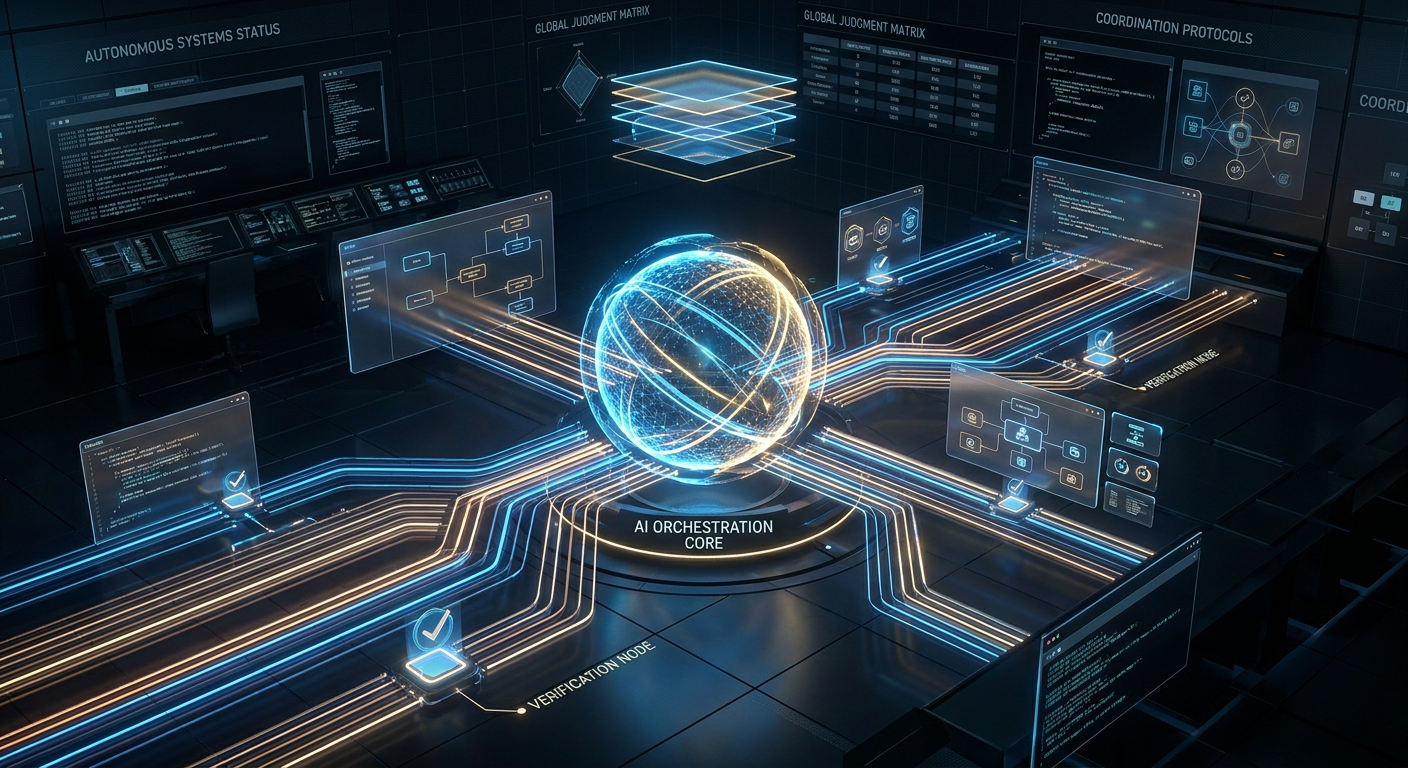
Anthropic’s new dynamic workflows feature, now in research preview for Claude Code, allows Claude to dynamically create orchestration scripts, break work into subtasks, and run tens to hundreds of parallel subagents within a single session. Those results are then checked before being returned to the user.
That is a significant product shift.
This moves Claude Code beyond the familiar model of “one agent, one thread, one task” and toward something much closer to coordinated autonomous engineering. Anthropic is explicitly targeting work such as:
- codebase-wide bug hunts
- security audits across large repositories
- framework migrations and modernization efforts
- repo-scale refactors
- high-risk tasks that benefit from independent attempts and adversarial checking
In other words, dynamic workflows is about giving the system enough structure to tackle work that would normally be too large, too parallel, or too verification-heavy for a single conversational agent.
Why This Matters for Real Engineering Teams
Most AI coding tools still break down at the same place: scale. They can help with a function, a file, or maybe a scoped issue. But once the job spans hundreds or thousands of files, multiple dependencies, conflicting assumptions, and long verification loops, the productivity story usually gets fuzzy.
Dynamic workflows is Anthropic’s attempt to solve that exact problem.
The important part isn’t merely parallelism. Plenty of systems can spawn parallel work. The important part is orchestration with verification. Anthropic describes workflows where different agents approach a problem independently, other agents try to refute the result, and the process iterates until answers converge.
That’s a much more serious model of autonomous work than “generate a patch and hope for the best.”
For engineering leaders, that shifts the value proposition:
- Less manual task slicing. The system can decompose large problems on its own.
- More realistic use on legacy systems. Big, ugly codebases are where agentic tooling usually suffers.
- Higher confidence on critical tasks. Independent validation is essential when mistakes are costly.
- A path toward true repo-scale automation. Not just code completion—coordinated execution.
This is the kind of capability that starts to blur the line between coding assistant and autonomous engineering platform.
There Is a Cost: Usage and Governance Still Matter
Anthropic is also pretty candid about the catch. Dynamic workflows can consume substantially more tokens than a normal Claude Code session. That’s not a minor footnote; it’s the economic reality of agent orchestration.
If you run hundreds of subagents, ask them to check one another’s work, and let jobs continue over hours or days, your cost profile changes. Your governance model also changes.
That means organizations evaluating this feature should think about more than raw capability:
- What tasks are worth this level of orchestration?
- What approval gates should exist before a workflow runs?
- How do you monitor long-running jobs?
- What guardrails exist around destructive actions?
- How do you budget for workflows that trade more tokens for more certainty?
Anthropic’s answer includes explicit user confirmation the first time a workflow triggers and optional admin controls for disabling workflows. That’s wise. The more autonomous the system becomes, the more important operational controls become as well.
Effort Control Shows Anthropic Understands the Tradeoff
Another launch detail worth noting is Anthropic’s new effort control. Users can now choose how much effort Claude puts into a response, trading off speed, rate-limit consumption, and output quality.
That complements both Opus 4.8 and dynamic workflows nicely. Not every task needs deep reasoning and multi-agent orchestration. Some work needs speed. Some needs depth. Some needs both.
This increasingly looks like the future of serious AI systems: not one fixed behavior, but configurable execution modes depending on the cost, risk, and complexity of the task.
The Bigger Strategic Picture
Anthropic’s release suggests three broader trends.
1. Model quality is increasingly about judgment, not just knowledge
The strongest claims in this launch are about reliability, honesty, self-correction, and instruction-following in long tasks. That’s where the frontier is moving. Smarter is useful. Sounder judgment is what makes autonomy deployable.
2. The product moat is shifting toward orchestration
A strong model matters, but the system around the model matters just as much. Dynamic workflows shows Anthropic understands that the next competitive layer is not merely raw intelligence. It’s coordinated execution, verification, and recoverability on large tasks.
3. Agentic engineering is becoming a first-class workflow
We’ve been inching from chatbots toward copilots, and from copilots toward agents. Dynamic workflows pushes further: toward structured fleets of agents operating within one managed task. That’s not a gimmick feature. That’s a preview of how serious technical work may increasingly get done.
Single-Agent Assistance vs. Orchestrated Execution
This is the practical distinction enterprise teams should focus on.
Single-agent assistance is what most organizations already understand. You ask a model to explain a file, draft a function, summarize a ticket, or suggest a fix. The human still does most of the decomposition, most of the validation, and all of the coordination across the broader task.
Orchestrated execution is different. The system breaks the work apart, launches parallel efforts, compares conflicting results, verifies outputs, and returns something closer to a managed outcome than a helpful suggestion. The human still owns governance and final judgment, but the machine is now handling much more of the operational burden.
That distinction matters because it changes how teams should evaluate tools like Claude Code with dynamic workflows.
If you’re assessing a single-agent assistant, you ask questions like:
- Does it write decent code?
- Does it understand our stack?
- Does it save engineers time on scoped tasks?
If you’re assessing orchestrated execution, the questions get more serious:
- Can it decompose large work without drifting?
- Can it verify results instead of merely producing them?
- Can it operate safely across a large codebase with meaningful guardrails?
- Can it produce outputs that reduce review burden rather than just shifting it?
- Can it justify the cost of higher token consumption through better reliability and throughput?
That’s where the real business value starts to show up. A stronger autocomplete is nice. A system that can materially compress migrations, audits, and codebase-wide investigations is a different category of tooling altogether.
For enterprise leaders, the takeaway is simple: don’t evaluate releases like this as model news alone. Evaluate them as workflow architecture. The question is not just whether Opus 4.8 is smarter than Opus 4.7. The question is whether Anthropic is assembling a stack that can take meaningful engineering work from prompt to validated outcome with less human coordination in the loop.
So, Is This a Big Deal?
Yes—but not because Opus 4.8 suddenly changes everything by itself.
The bigger significance is that Anthropic is tightening the loop between model judgment and agent orchestration. Better reasoning without better execution remains a demo. Better execution without better judgment remains dangerous. Combining the two is how these systems become genuinely useful in production environments.
Opus 4.8 looks like a meaningful refinement of the model. Dynamic workflows looks like the more strategically important launch. Together, they push Claude deeper into a future where AI is not just answering prompts, but coordinating substantial technical work across an entire codebase.
And for enterprise teams trying to separate real agentic progress from marketing fog, that’s the signal worth paying attention to.